
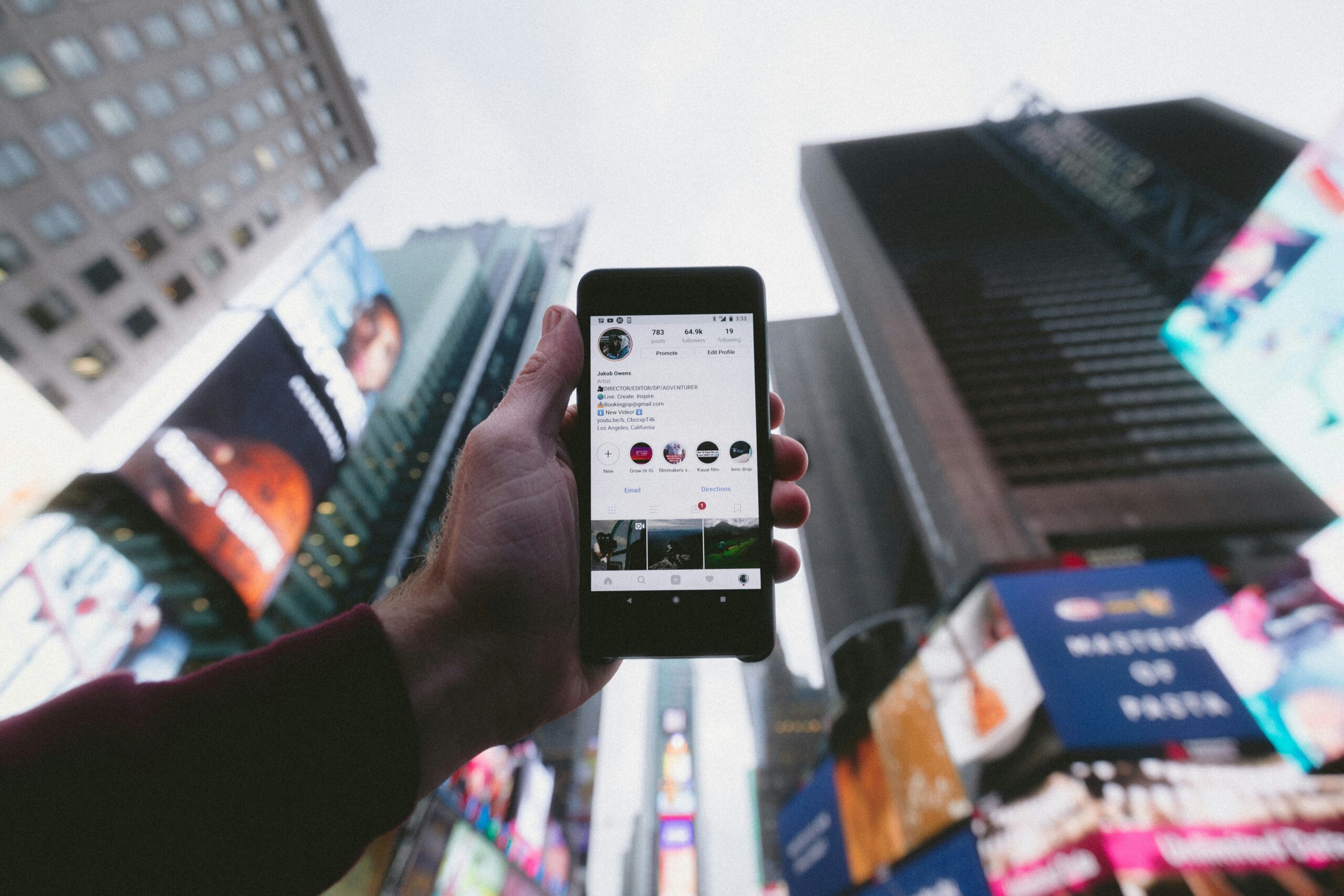
When artists compare Behance vs Instagram vs portfolio website options, the real question is which platform actually brings in clients. The honest answer is that it depends on what kind of work you do and who you are trying to reach. A graphic designer doing client work, a fine arts MFA applicant, and an illustrator building a freelance practice all need different things from their online presence. This guide breaks down what each platform is actually good for, what it costs to maintain, and how the three work together when you get the combination right.
1. Behance vs Instagram vs Portfolio Website — The Short Answer
For artists choosing between Behance, Instagram, and a portfolio website, each platform serves a different purpose. Instagram is where people discover you. Behance is where the design and creative industry looks for professional work. None of them is a complete solution on its own — but understanding what each one does well makes it easier to decide where to put your energy.

2. Instagram — Where You Get Discovered
Instagram remains the most widely used visual platform for artists, and its main advantage is reach. Even without an existing following, Reels and hashtags can surface your work to people who have never heard of you. Many illustrators and commercial artists receive their first client inquiries through Instagram DMs — which is not nothing. For artists whose work translates well to short-form visual content, it is often the fastest way to build an audience from scratch.
The limitations are real, though. The platform is not designed for portfolio organization — finding a specific project from two years ago requires scrolling, and there is no clean way to categorize work by medium, client, or theme. Algorithm changes can cut your reach overnight regardless of consistency. And follower count functions as a proxy for credibility in ways that feel arbitrary but are hard to ignore when someone is deciding whether to reach out.
Paid promotion is an option, but the costs vary widely and results are unpredictable. A small daily budget can extend your reach modestly, but spending money on Instagram ads before you have a clear sense of your audience tends to produce little return. It is worth experimenting with, but not something to rely on as a primary client acquisition strategy.
Client acquisition potential: moderate. For artists, Instagram builds awareness and occasionally brings clients directly — but more often it is the first step in a longer journey that ends somewhere else.
3. Behance — Where the Design Industry Looks
Behance is a portfolio platform built specifically for the creative industry — and for artists working in design, it remains the most professionally credible of the three. Graphic designers, UI/UX designers, motion designers, and brand strategists are its core users — and hiring managers and art directors at agencies genuinely do search Behance when looking for talent. If you work in design and want to be found by people making hiring decisions, Behance is still worth maintaining.
For fine arts practitioners, the platform is less relevant. The community skews heavily toward commercial design work, and the discovery mechanisms favor that kind of content. Building a following on Behance is also significantly harder than on Instagram — the social layer is thinner and less active.
The basic platform is free, which makes it a low-friction addition to an existing online presence. Adobe Creative Cloud subscribers get additional features, but subscribing to CC purely for Behance access does not make sense — it is a useful bonus if you are already paying for the suite, not a reason to start.
Client acquisition potential: high in design, low in fine arts. For designers, a well-maintained Behance profile is a legitimate professional asset. For painters, sculptors, or photographers working outside the commercial design world, the time investment is harder to justify.
4. Artist Portfolio Website — The Only Platform You Actually Own
A personal website is the only platform you fully own. Unlike social platforms, your portfolio site can continue bringing traffic through Google search for years — without algorithm changes, platform policy shifts, or the need to post consistently to stay visible. If someone searches “portrait artist New York” or “brand identity designer Chicago” and your site is optimized for those terms, you can receive inquiries without doing anything in the moment. That kind of passive traffic is not available on Instagram or Behance.
It is also the most flexible presentation format. You decide the structure, the sequence, the amount of context around each project, and what the overall experience of looking at your work feels like. For artists applying to MFA programs or submitting to galleries, a well-organized personal site communicates something that a social media profile cannot — that you think carefully about how your work is presented. For more on portfolio preparation in the context of MFA applications, see our guide to what to prepare first for MFA applications.
The cost is real and worth being clear-eyed about. A domain name runs $10 to $15 per year. Platform fees are separate — Squarespace’s Personal plan is $16 per month billed annually, the Business plan $23 per month. Cargo, which is widely used among fine arts practitioners and MFA applicants, costs $13 per month for the paid plan. Factoring everything together, a personal portfolio website costs roughly $170 to $290 per year depending on your platform choice. That is a real expense, and it is worth building into your budget rather than being surprised by it. For a detailed comparison of Squarespace and Cargo specifically, see our guide to the best portfolio platforms for artists.
Client acquisition potential: high, when the SEO is working. The upfront investment is higher than Instagram or Behance, but the long-term return — traffic that does not depend on posting frequency or algorithm favor — is more reliable. For tracking how your portfolio site performs in search, Google Search Console is the best free tool available.
5. Behance vs Instagram vs Portfolio Website — Side-by-Side Comparison for Artists
| Behance | Portfolio Website | ||
|---|---|---|---|
| Discoverability | High | Moderate | Depends on SEO |
| Client Acquisition | Moderate | High (design), Low (fine arts) | High (with SEO) |
| Portfolio Organization | Poor | Good | Excellent |
| Base Cost | Free | Free | $13–$23/month + domain |
| Paid Promotion | Optional, variable cost | Not applicable | Replaced by SEO |
| Best For | Illustration, commercial art | Graphic/UX design | All disciplines |
| Long-term Asset | Low | Moderate | High |
6. Why All Three Work Better Together
Running Behance, Instagram, and an artist portfolio website simultaneously sounds like a lot — and it is, if you treat each one as a separate full-time commitment. But the three platforms serve genuinely different functions, and when they are connected they reinforce each other in ways that none of them can do alone.
Consider a designer doing freelance client work. Behance holds the organized project documentation — process, final deliverables, context — that industry professionals and hiring managers look for. The personal website presents the same work through the lens of a complete practice, with the ability to contact directly. Instagram shows the person behind the work: the process shots, the aesthetic sensibility, the things they find interesting. Someone might discover that designer through Instagram, follow the link in their bio to the website, check the Behance profile for project depth, and then reach out. Each platform did something the others could not.
The practical implication is not that you need to post equally on all three. It is that each platform should point toward the others, and that the work on each one should be consistent enough that moving between them does not create confusion about who you are. One platform as the primary hub — usually the personal website for long-term client acquisition — with the other two feeding into it is the most sustainable model for most artists.
7. Which Platform Should You Prioritize?
For artists working with commercial clients, the choice between Behance, Instagram, and a portfolio website is not an either/or decision. Behance is worth maintaining as a professional reference point, Instagram is useful for ongoing visibility, and a personal website becomes essential once you want to bring in clients directly rather than waiting to be found. Build the website when you are ready to invest the time in making it good — a poorly maintained personal site is worse than none at all.
If you are a fine arts practitioner — applying to MFA programs, submitting to galleries, building a studio practice — a personal website is the most useful investment you can make in your online presence. Instagram serves as a secondary channel for visibility and community. Behance is probably not worth the time unless your work has a strong design component. For guidance on presenting your work for MFA applications specifically, see our guide to how to organize an MFA portfolio.
If you are primarily trying to build a freelance illustration or commercial art practice, Instagram is likely your most important channel in the short term because it is where clients in that space look for artists. Build the personal website alongside it, and link between them clearly. Behance is optional depending on how design-adjacent your work is.
The best platform is the one you will actually maintain. A well-kept Instagram with consistent work will outperform a neglected personal website every time — and vice versa. For artists balancing Behance, Instagram, and a portfolio website, choose your primary platform based on where your clients actually are, not where you think you should be.

Frequently Asked Questions
Behance vs Instagram vs Portfolio Website — Do Artists Need All Three?
Not necessarily. Many artists do well with just two of the three — Behance, Instagram, or a portfolio website — rather than maintaining all of them. The case for maintaining all three is strongest when your work spans both fine arts and commercial design contexts. If you are focused on one area, prioritize the platform that is most relevant to your specific goals and add the others when you have capacity to maintain them properly.
Is Behance still relevant in 2026?
For designers, yes. The platform has lost some of its earlier energy, but it remains a legitimate reference point in the creative industry — particularly for agency hiring. For fine arts practitioners, it is less relevant than it was, and the time investment is harder to justify compared to a well-maintained personal website.
Can Instagram actually bring in clients for artists?
Yes. For artists using Instagram alongside Behance and a portfolio website, it works particularly well for illustrators, surface pattern designers, and commercial artists whose work is visually immediate and easily communicated in a single image or short video. For artists whose work requires more context — installation, conceptual practice, long-form projects — Instagram is more useful for awareness than for direct client acquisition. In those cases, the website does the heavier lifting.
How much does it actually cost to maintain a portfolio website?
For artists maintaining a portfolio website alongside Behance and Instagram, budget between $170 and $300 per year — domain registration plus a platform subscription. Cargo at $13 per month is the lower end; Squarespace Business at $23 per month is the higher end. Both are legitimate options depending on how much customization you want. The domain is typically $10 to $15 per year on top of either. For a full comparison of both platforms, see our guide to the best portfolio platforms for artists.
In the end, the Behance vs Instagram vs portfolio website debate matters less than choosing the platform you can maintain consistently over time.