
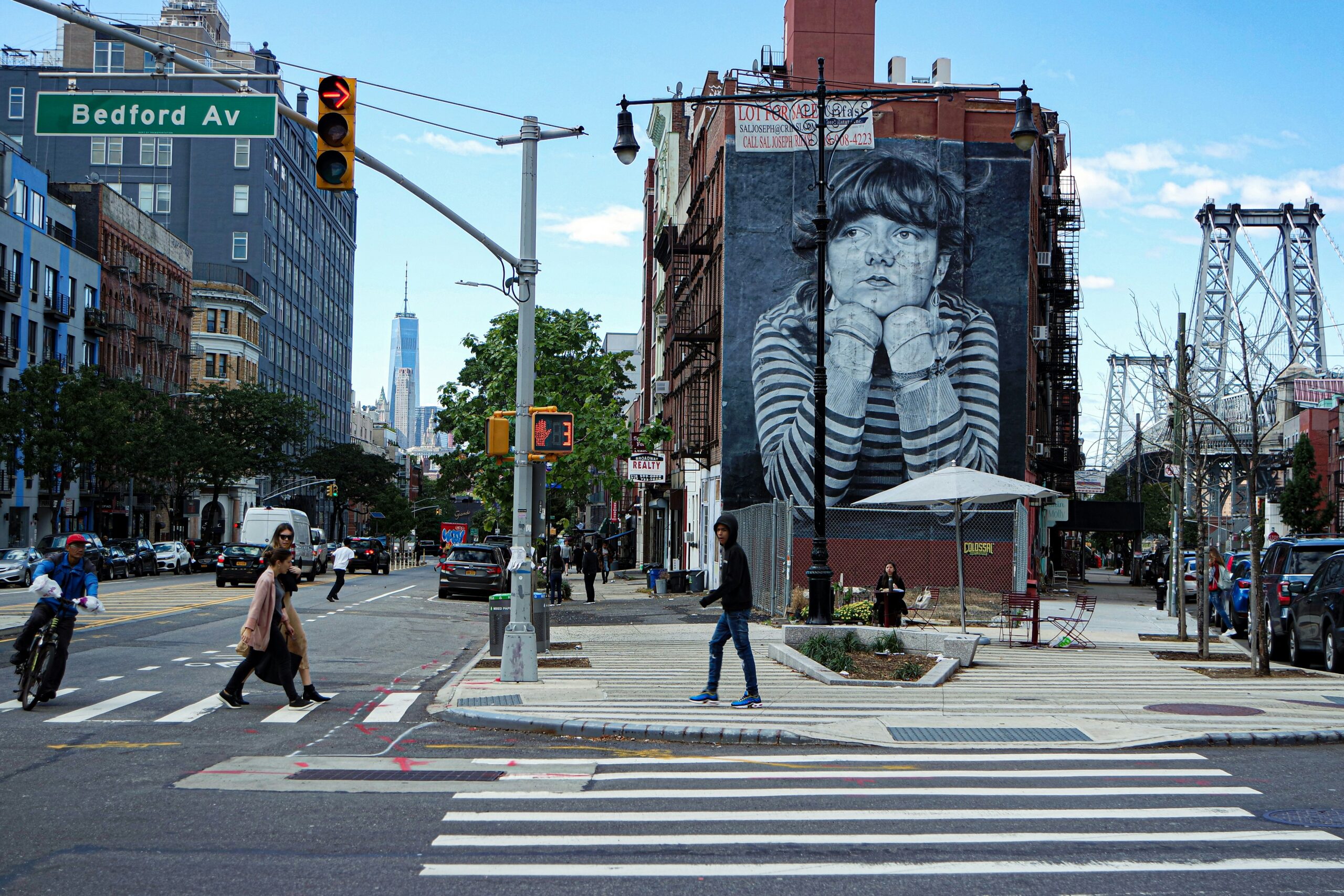
When most people think about New York art galleries, Chelsea comes to mind first — and reasonably so. The concentration of major galleries along 10th and 11th Avenues between 20th and 27th Streets is unmatched anywhere in the city. But New York art galleries outside Chelsea are where a different side of the city’s art world becomes visible: more experimental, more community-rooted, and often more directly connected to the artists making the work.
This guide covers five neighborhoods where New York art galleries outside Chelsea are worth exploring — what each one offers, which spaces to look for, and how to visit them effectively. For context on the Chelsea scene itself, the Chelsea galleries guide covers the major spaces and what to expect there. For a broader overview of New York’s gallery landscape, the New Yorker’s art listings are a reliable way to track what’s currently on across the city.
Table of Contents
- Bushwick, Brooklyn — Experimental and Artist-Run
- Lower East Side, Manhattan — Independent and Historical
- Harlem, Manhattan — Community-Rooted and Historically Deep
- Long Island City, Queens — Institutions and Industrial Scale
- The Bronx — An Emerging Scene
- Best Time to Visit New York Galleries
- Suggested One-Day Routes
- Frequently Asked Questions
Bushwick, Brooklyn — Experimental and Artist-Run
Bushwick has developed one of the most active artist communities in New York over the past decade. Where Chelsea’s galleries tend to represent established mid-career and major artists, the artist-run galleries in Brooklyn — particularly in Bushwick — are often operated by artists themselves, with a focus on experimentation rather than market positioning.
The spaces here occupy converted warehouses, former commercial storefronts, and industrial lofts — and the physical character of those spaces often shapes what kind of work gets shown. Large-scale installation, performance, video, and work that hasn’t yet found a commercial home all appear regularly in Bushwick.
Spaces Worth Visiting
Transmitter — an artist-run gallery known for conceptually driven exhibitions, publishing projects, and experimental curatorial programming. One of the more respected long-running independent spaces in Bushwick.
Bushwick Gallery — opened in 2024 at 22 Fayette Street, operating by appointment with a focus on painting, sculpture, and installation from both emerging and established artists internationally.
Bushwick Collective — not a gallery in the traditional sense, but one of the most significant public art projects in New York. The exterior walls of several blocks around Troutman Street and St. Nicholas Avenue are covered in large-scale murals by artists from around the world. Free to visit at any time.
Because Bushwick’s gallery landscape changes frequently, following individual spaces on Instagram is the most reliable way to track what’s currently open and when. Many operate by appointment or have limited walk-in hours.
Visiting Tips
Many Bushwick galleries operate by appointment or have limited open hours — check Instagram or email ahead. The first Friday of each month brings openings across multiple spaces simultaneously, making it the best single evening to visit the neighborhood. Follow individual galleries rather than relying on aggregated listings, which are often outdated.
Getting there: J, M, Z subway lines → Myrtle Ave or Knickerbocker Ave

Lower East Side, Manhattan — Independent and Historical
The Lower East Side was the center of New York’s independent gallery scene before Chelsea consolidated that role in the late 1990s. Many galleries stayed, and the neighborhood retains a distinct character — smaller spaces, less commercial pressure, and a higher tolerance for work that doesn’t fit neatly into market categories. The independent galleries in New York that have stayed here tend to be among the most committed to non-commercial practice.
Spaces Worth Visiting
Sperone Westwater — housed in a distinctive multi-level gallery building on the Bowery, with a moving room that functions as both gallery space and elevator. Represents artists including Bruce Nauman and Susan Rothenberg. One of the most architecturally notable gallery spaces in New York.
Participant Inc. — a nonprofit exhibition space focused on performance, video, and experimental work. One of the most important non-commercial spaces in the city for work that resists easy categorization.
Foxy Production — represents a strong international roster of emerging and mid-career artists. Programming tends toward conceptually rigorous work across multiple media.
Visiting Tips
Orchard Street and Rivington Street form the core of the LES gallery corridor — most of the main spaces are within easy walking distance of each other. Thursday and Friday evenings bring openings. The neighborhood is also worth exploring for its restaurants and small shops, making a gallery visit easy to combine with a longer afternoon or evening.
Getting there: F subway → Delancey St; J, M, Z → Delancey/Essex St
Harlem, Manhattan — Community-Rooted and Historically Deep
Harlem’s relationship with art is inseparable from its history as a center of African American cultural life. Among New York art galleries outside Chelsea, Harlem’s spaces are distinctive for being community-rooted in a way that most commercial gallery districts are not. The Harlem Renaissance of the 1920s and 30s established the neighborhood as one of the most important sites of cultural production in American history, and that legacy continues to shape what galleries and institutions here prioritize.
Spaces Worth Visiting
Studio Museum in Harlem — the most significant institution in the neighborhood, dedicated to artists of African descent and the African diaspora. While its permanent building remains under redevelopment, the Studio Museum continues to organize exhibitions and public programs across Harlem. Check their website for current programming locations before visiting.
The Schomburg Center for Research in Black Culture — a research library and cultural institution that also organizes exhibitions of visual art connected to African American and African diasporic history and culture. The gallery programming runs alongside the archival collections, making it one of the more contextually rich exhibition spaces in New York.
Harlem Arts Alliance — a nonprofit organization that supports and connects arts organizations throughout Harlem, with programming and resources for artists working in the neighborhood.
Visiting Tips
125th Street is the main cultural corridor — the Apollo Theater, the Studio Museum’s off-site programming, and several galleries and cultural organizations are all concentrated nearby. A visit to Harlem is most rewarding when combined with time in the neighborhood itself: the food, the architecture, and the street life are all part of the experience.
Getting there: 2, 3 subway → 125th St
Long Island City, Queens — Institutions and Industrial Scale
Long Island City sits directly across the East River from Midtown Manhattan — ten to fifteen minutes by subway — and hosts some of the most significant art institutions among New York art galleries outside Chelsea. These alternative New York gallery neighborhoods in Queens offer something Chelsea doesn’t: industrial-scale spaces where work that requires room — large installations, architectural interventions, sound — can exist on its own terms.
Spaces Worth Visiting
MoMA PS1 — the Museum of Modern Art’s contemporary art partner, housed in a former school building in Long Island City. PS1 focuses on experimental and non-commercial contemporary practice, with programming that tends to be more adventurous than the main MoMA building in Midtown. The summer Warm Up series, which combines music and exhibitions in the courtyard and is typically held during summer months, is one of the more distinctive events in the New York art calendar.
SculptureCenter — a nonprofit institution dedicated to sculpture and installation in a converted trolley repair shop. The building itself — low ceilings, underground spaces, industrial materials — shapes the programming in interesting ways. Known for the In Practice open call that supports emerging sculptors.
The Noguchi Museum — dedicated to the work of Isamu Noguchi, combining sculpture, architecture, and landscape design in a uniquely contemplative setting. The garden is as much a part of the experience as the indoor galleries. One of the most distinctive museum environments in New York.
Visiting Tips
MoMA PS1 and SculptureCenter are within walking distance of each other. The Noguchi Museum is a short walk or bus ride away. All three can be visited in a full day, making Long Island City one of the most efficient destinations for seeing multiple strong institutions in a single trip.
Getting there: E, M, 7 subway → Court Sq; or the NYC Ferry from Midtown

The Bronx — An Emerging Scene
The Bronx has long been overlooked on New York’s gallery map, but that’s been changing. Around Mott Haven and the South Bronx, emerging art spaces in NYC have been developing steadily, drawing artists priced out of Brooklyn and attracted by the neighborhood’s strong community character and lower rents. It’s one of the few places in New York where you can witness a gallery scene in the process of forming.
Spaces Worth Visiting
The Bronx Museum of the Arts — the borough’s primary arts institution, with a programming focus that bridges local community and international contemporary art. Free general admission. Worth checking for current exhibitions before visiting.
Longwood Art Gallery @ Hostos — located within Hostos Community College, this gallery presents work by Bronx-based and broader New York artists with a consistent focus on the communities of the South Bronx.
Mott Haven artist studios — a number of working artists have studios in the Mott Haven area, and open studio events periodically give access to work in progress. Following local arts organizations on social media is the best way to find out about these events.
Visiting Tips
The Bronx gallery scene is still developing, which means verifying hours and current programming before visiting is more important here than in more established neighborhoods. Events like the Mott Haven Art Walk are worth timing a visit around if possible.
Getting there: 6 subway → 138th St-Grand Concourse (Mott Haven)
Best Time to Visit New York Art Galleries
Timing matters more than most first-time gallery visitors realize. Whether you’re visiting New York art galleries outside Chelsea or the major spaces in Chelsea itself, the city’s gallery schedule has distinct rhythms worth knowing. The Artforum events listings are a reliable resource for tracking openings and exhibitions across the city in real time.
Thursday and Friday Evenings
Most gallery openings happen on Thursday or Friday evenings, typically from 6 to 8pm. These events are free and open to the public — no invitation needed. They’re also the best opportunity to see multiple new shows in a single evening, since many galleries time their openings to coincide.
First Friday in Bushwick
The first Friday of each month is when Bushwick’s gallery scene is most active. Multiple spaces open simultaneously, making it the most efficient time to experience the neighborhood’s experimental gallery culture in a single visit.
Sunday Afternoons
Sunday afternoons are generally quieter in New York galleries — fewer visitors, more time to look at work without crowds. If you prefer a slower pace and the ability to talk with gallery staff, Sunday is often a better choice than opening nights.
August Closures
Many New York galleries close or operate on reduced hours in August, when collectors and staff typically travel. If you’re visiting in August, check individual gallery websites before planning a gallery-focused day. The major institutions (MoMA PS1, the Bronx Museum, the Noguchi) remain open, but smaller commercial galleries may be closed or showing summer group exhibitions with limited staff.
Suggested One-Day Routes
Lower East Side + Chinatown
Start at Sperone Westwater on Bowery, then walk south along Orchard Street hitting Participant Inc. and Foxy Production. Cross into Chinatown for lunch — the food options are excellent and inexpensive. Spend the afternoon exploring the remaining LES galleries before heading to the neighborhood’s bars and restaurants in the evening. This works particularly well on a Thursday or Friday when openings are likely.
Bushwick First Friday
Arrive in Bushwick around 6pm on the first Friday of the month. Walk the Bushwick Collective murals on Troutman Street first, then follow opening signs or your pre-researched list of galleries with programming that evening. Most openings run until 9 or 10pm. The neighborhood has a strong food and bar scene for afterward. This route requires research in advance — check individual gallery Instagram accounts the week before to confirm which spaces are opening that evening.
Frequently Asked Questions
Q1. Are New York art galleries free to visit?
Most commercial galleries are free. You walk in, look at the work, and leave — no ticket, no reservation. Nonprofit institutions and museums charge admission, though many offer free hours or student discounts. MoMA PS1, the Noguchi Museum, and the Bronx Museum all have admission policies worth checking before you visit.
Q2. Are New York galleries open on Mondays?
Most are not. Monday is the standard day off for New York galleries — both commercial and nonprofit. If you’re planning a gallery-focused visit, Tuesday through Sunday is a safer window, with Thursday and Friday being the most active days for openings and events. Always check individual gallery hours before visiting, as schedules vary and change between exhibitions.
Q3. Do I need an invitation to attend a gallery opening?
No. Gallery openings in New York are generally open to the public. If a gallery lists an opening on its website or Instagram, you can attend. Some galleries send invitation emails to their mailing lists, but not being on the list doesn’t mean you can’t come — it’s mostly a way for galleries to track attendance and maintain contact with collectors and press.
Q4. How is the gallery scene in these neighborhoods different from Chelsea?
Chelsea is primarily composed of commercial galleries representing established artists, oriented around sales to collectors. New York art galleries outside Chelsea tend to be smaller, more experimental, more community-focused, and less driven by market dynamics. Neither is better — they serve different functions in the city’s art ecosystem. Artists and serious art viewers benefit from knowing both.
Q5. Can I visit multiple neighborhoods in one day?
You can, but it’s often more satisfying to focus on one or two. New York’s subway is efficient, but moving between Bushwick, Long Island City, and Harlem in a single day means spending significant time on the train. The LES and Chinatown are walkable together. Bushwick is best as a standalone evening destination on a first Friday. Long Island City is ideal as a full-day institution visit. For artists visiting specifically to engage with the gallery world as a working artist, the guide to approaching galleries professionally covers how to make those visits count.
Q6. What’s the best neighborhood for emerging art?
Bushwick and the Lower East Side consistently show the strongest concentration of emerging artist work in New York. Both neighborhoods have lower overhead costs than Chelsea, which allows galleries to take more risks on artists who don’t yet have established market track records. The Bronx is increasingly worth watching as well, as the scene there continues to develop. For artists wanting to understand what these spaces look for, the guide on what new galleries look for in artists covers the criteria that matter most.
Final Thoughts
New York art galleries outside Chelsea aren’t a consolation prize for visitors who couldn’t make it to the main event. They represent a different kind of art world — more porous, more experimental, more directly connected to the artists and communities making work rather than the collectors buying it.
Bushwick on a first Friday, a quiet Sunday afternoon at the Noguchi, a visit to the Studio Museum’s off-site programming in Harlem — these experiences give you a different picture of what the experimental galleries in New York are and how they function than a day in Chelsea alone ever could. For artists in particular, understanding the full geography of the city’s gallery world is part of understanding the field you’re working in.
For more on how to engage with these spaces as a working artist, the guide to approaching galleries professionally is a useful next step. For New York’s broader museum landscape, the must-visit museums in New York for artists covers the institutions worth knowing alongside the gallery circuit.