
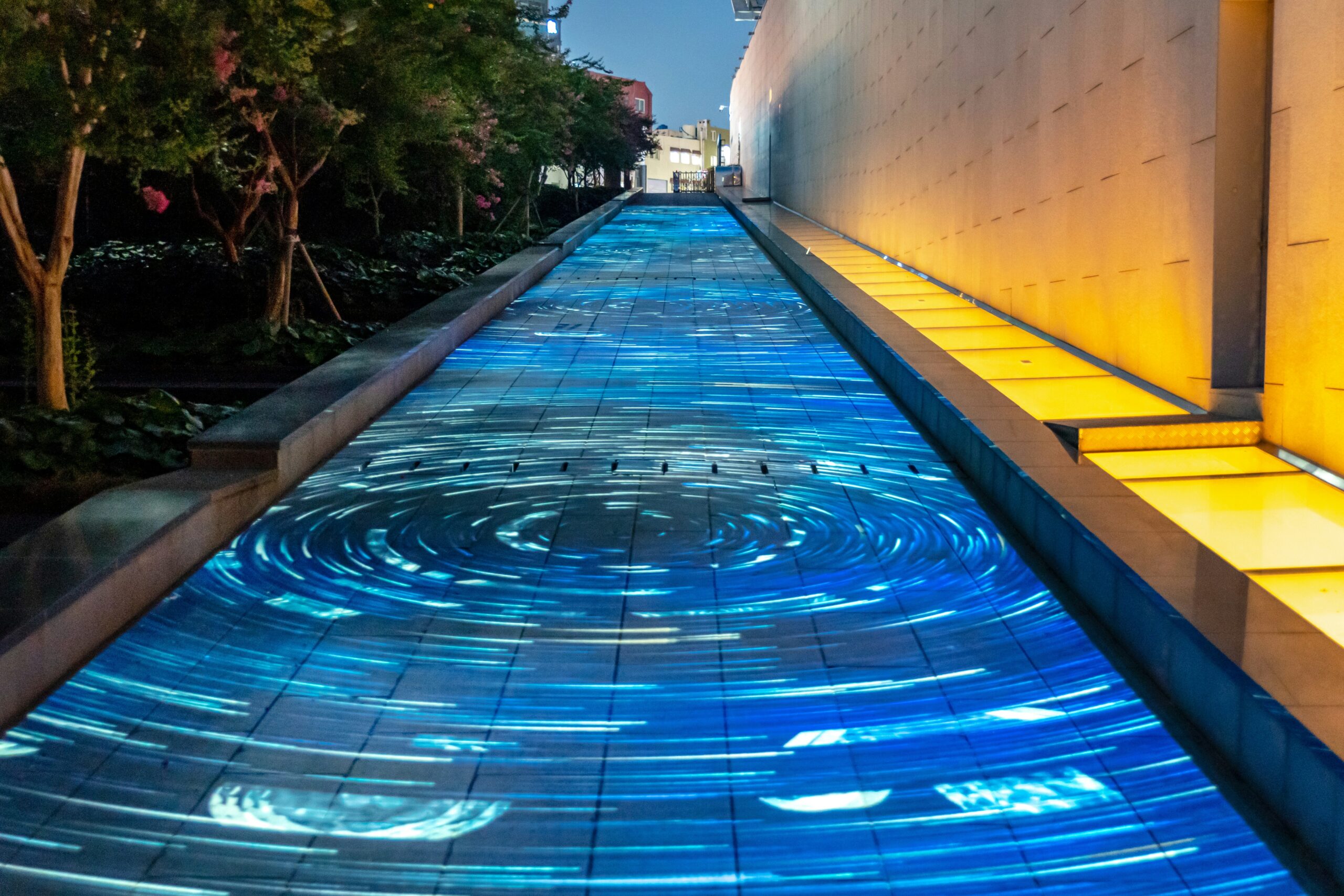
The ACC Creators Residency is one of the most accessible and well-supported artist residency programs in Korea for international artists. Run by the National Asian Culture Center in Gwangju, it is one of the few Korean public residency programs that actively welcomes applications from artists around the world through an open international call every year. If you work at the intersection of art and technology and you are looking for a funded residency in Korea that covers accommodation, airfare, and a project budget — this program is worth serious attention.

What Is the ACC Creators Residency?
The National Asian Culture Center is an international arts institution dedicated to bringing together Asian cultural heritage and contemporary creative practice. The ACC Creators Residency is a cross-disciplinary platform that supports experimental and future-oriented projects by artists, researchers, engineers, and creative practitioners working at the intersection of art and technology. This is not simply a studio space — the program supports the entire creative process, from research and production through to public presentation and exhibition. For international artists looking for a residency in Korea that goes beyond a desk and a room, the ACC offers infrastructure and institutional support that few programs at this level can match.
2026 Program Overview
The theme for the 2026 ACC Creators Residency is Speculative Communities. The program focuses on Art and Technology, welcoming projects that engage with AI, VR, MR, XR, robotics, audiovisual media, and immersive sound. Eight teams — individuals or pairs of up to two people — are selected each year.
| Details | Information |
|---|---|
| Residency Period | Early July – End of November 2026 (5 months) |
| Number of Participants | 8 teams (individuals or up to 2 people) |
| Final Exhibition | November 20–29, 2026 |
| Fields | Art & Technology, Audiovisual, Immersive Sound |
What the ACC Creators Residency Provides
The support package is one of the main reasons international artists find this residency worth applying to. The ACC Creators Residency covers the basics in a way that many programs do not.
- Accommodation at the Asia Creative Studio
- Project budget: up to KRW 30,000,000 (approximately $22,000 USD)
- Individual stipend: KRW 2,500,000 (approximately $1,800 USD)
- Round-trip airfare for artists based outside Korea
- Studio workspace at the ACC Creative Production Studio
The combination of covered airfare, accommodation, a project budget, and a stipend makes this one of the most financially complete residency programs available to international artists in Korea. For a five-month commitment, the program covers most of the core costs of living and working during the residency period. For a comparison with another well-established program available to international artists in Korea, see our guide to MMCA Residency Korea.
Eligibility — Who Can Apply to the ACC Creators Residency
The residency is open to creative practitioners working in art, new media, design, architecture, engineering, and interdisciplinary practices — as long as you are capable of researching, developing, producing, and presenting a project within the program’s timeframe. There is no nationality restriction, which is what makes this program genuinely open to international artists in a way that many Korean residency programs are not.
There are a few practical considerations for international applicants. You must be able to obtain a visa for Korea for the duration of the residency. Additionally, obtaining a foreign resident registration card in Korea takes approximately two months, so artists who cannot commit to the full five-month period may face eligibility complications. This residency is best suited for artists who can make a full commitment to the program from start to finish.
About Gwangju — Why the Location Matters
The ACC Creators Residency is based in Gwangju, not Seoul — and for international artists, this is worth thinking about carefully rather than treating as a disadvantage. Gwangju has a deeply significant cultural and historical background. It is the site of the May 18th Democratic Uprising, one of the defining events in modern Korean history, and that history is embedded in the city’s cultural institutions and public spaces in ways that are immediately perceptible to anyone paying attention.
Gwangju is also home to the Gwangju Biennale, one of Asia’s most prominent international contemporary art events. The city has real ties to the global art world — it is not an isolated location, but a city with its own well-developed artistic identity. For international artists, experiencing Korea through Gwangju rather than Seoul offers a different kind of immersion: slower pace, lower cost of living, and more focused conditions for studio work. The distance from Seoul is actually a creative advantage for many residents.
How to Apply to the ACC Creators Residency
Applications are submitted online through the ACC official website. Required documents include an application form, CV, and portfolio. The application process is conducted in English, which makes it genuinely accessible for international applicants without Korean language ability.
For direct inquiries about the program, contact the ACC Creators Residency team at [email protected]. Check the official website for the most current deadlines — the application window opens annually and typically closes several months before the residency begins in July.
How to Write a Strong ACC Creators Residency Application
The ACC Creators Residency is competitive, and the project proposal is the most important part of your application. A few things that tend to separate stronger proposals from weaker ones.
Be specific about the technology you will use. The program values artists who have a clear relationship with the tools they are proposing to work with — not just an interest in AI or VR in general, but a concrete understanding of how a specific technology will function in your project. Vague proposals that gesture toward technology without demonstrating fluency with it tend not to advance.
Connect your proposal to the theme. The 2026 theme is Speculative Communities. The strongest applications will engage with this theme in a way that is specific to the artist’s existing practice — not by forcing a new direction, but by showing how the theme opens a genuine question that the artist is already working around.
Show that you can produce and present within five months. The program ends with a public exhibition in November. Your proposal should make it clear that the project you are describing is realistic within that timeframe — that you understand the production requirements and have thought through the logistics of presenting the work in a gallery context.
Include documentation of past work that demonstrates technical capability. If your proposal involves complex technical systems, your portfolio should show that you have successfully built and presented work at a similar level of complexity before. Committees are more comfortable funding ambitious proposals when the applicant has a track record of executing technical work.
Is the ACC Creators Residency Right for You?
The ACC Creators Residency is a strong fit for artists whose practice genuinely engages with technology — not as a tool but as a medium or subject. The program is not designed for painters or sculptors working in traditional media. If your work involves AI, immersive environments, interactive systems, or the relationship between technology and human experience, the ACC’s infrastructure and thematic focus will support that work directly.
It is also a good fit for artists who want a structured five-month period to develop a new project from research through to public exhibition — rather than a shorter residency that gives you space but less institutional support. The final exhibition in November means the program has a concrete endpoint, which some artists find useful as a productive constraint.
For international artists who want to spend time in Korea but are not sure whether a residency or a degree program is the right route, our guide to MFA portfolio vs residency portfolio covers the differences in how each path develops your practice and your professional profile. According to Res Artis, the global network of artist residencies, fully funded programs with project budgets of this scale are increasingly rare — which makes the ACC Creators Residency worth applying to even for artists who are not certain it is the right fit.
Frequently Asked Questions — ACC Creators Residency
Do I need to speak Korean to apply to the ACC Creators Residency?
No. The application process is conducted in English, and the program is designed to accommodate international artists who do not speak Korean. Basic English communication is sufficient for the application. During the residency itself, the ACC provides support for international participants, though having some basic Korean language skills will make daily life in Gwangju more comfortable.
Can I apply as an individual or do I need a team?
Both are possible. The program accepts applications from individuals and from teams of up to two people. If you are applying as a pair, make sure your application clearly explains how the collaboration functions and what each person contributes to the proposed project.
What kind of projects does the ACC Creators Residency support?
The program focuses on Art and Technology, with particular interest in projects that engage with AI, VR, MR, XR, robotics, audiovisual media, and immersive sound. Projects that are purely studio-based without a technological component are generally not a strong fit. The 2026 theme is Speculative Communities — proposals that engage with that theme in a specific and considered way will be more competitive than those that treat it loosely.
How does the ACC Creators Residency compare to the MMCA Residency?
The two programs serve different kinds of artists. The ACC Creators Residency is specifically oriented toward art and technology practice, with a larger project budget and a focus on producing new work for a final exhibition. The MMCA Residency is more broadly open to visual artists across media and has a stronger connection to Korea’s major contemporary art institutions. For a full comparison, see our guide to MMCA Residency Korea.
The ACC Creators Residency offers more than just a studio space and a stipend. It provides a complete creative infrastructure — from research and development through to public exhibition — alongside a genuine immersion in one of Korea’s most culturally significant cities. For international artists working at the intersection of art and technology, it is one of the most substantive opportunities currently available in Asia.