
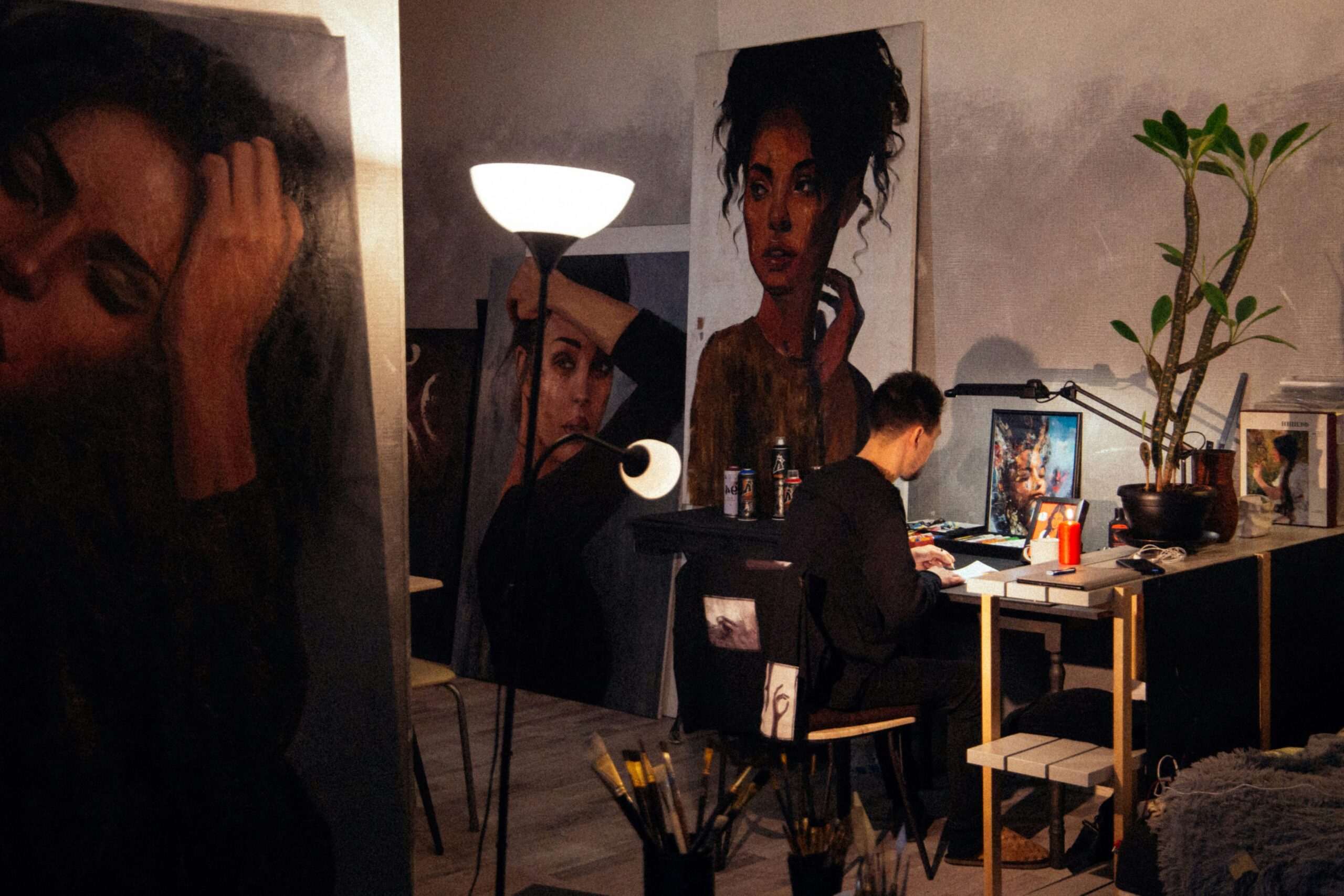
When preparing an MFA portfolio, one of the first questions most applicants ask is: how many artworks should I include in my MFA portfolio? Ten? Twenty? Does more always mean better — or does a tightly edited selection make a stronger impression?
The honest answer is that how many artworks in an MFA portfolio is the right number depends on several factors: the school’s specific requirements, the medium you work in, and the strength and coherence of the work itself. This guide breaks down each of those factors so you can make the decision about how many artworks for your MFA portfolio strategically rather than by guesswork.
Table of Contents
- School Requirements — Check These First
- How Many Is Actually Right?
- Considerations by Medium
- Which Works to Include
- How to Handle Series Work
- Submission Format Considerations
- Pre-Submission Checklist
- Frequently Asked Questions
School Requirements — Check These First
Before making any decisions about how many artworks in an MFA portfolio you’ll submit, confirm the specific requirements for each program you’re applying to. The question of how many artworks for an MFA portfolio is answered differently by each school — requirements vary and change from year to year.
The table below reflects general ranges based on publicly available information. Treat it as a starting reference only.
| School | Typical Range | Format |
|---|---|---|
| Yale School of Art | 15–20 works | Online portal |
| RISD | 12–20 works | Online submission |
| Parsons MFA | 10–20 works | PDF or online |
| SAIC | 10–20 works | Online portal |
| Columbia University MFA | 15–20 works | Online submission |
| Pratt Institute MFA | 10–20 works | Online or PDF |
| University of Michigan MFA | 15–20 works | Online portal |
| CalArts MFA | 10–20 works | Online submission |
Always verify requirements directly on each school’s official graduate admissions page. Some programs specify the number of works; others specify the number of uploadable images — which is a meaningful distinction, especially for sculpture, installation, or series-based work where multiple images represent a single piece.
For a full overview of how the portfolio fits within the broader MFA application, the complete MFA application guide covers every component and how they interact.

How Many Is Actually Right?
Most MFA programs allow between 10 and 20 works. Within that range, the right answer to how many artworks in an MFA portfolio is the number where every included piece is genuinely strong and contributes to a coherent overall impression.
There’s no universal advantage to submitting fewer works. If you have 18 strong pieces and the program allows 20, submitting 18 is a reasonable choice. If you have 12 strong pieces and the program allows 20, submitting 12 well-chosen works is better than padding with weaker material to reach a higher count. The goal is not to fill slots — it’s to leave the reviewer with a clear, consistent impression of your practice. The College Art Association’s MFA standards offer useful context for what well-structured programs typically look for in portfolio submissions.
Submitting far below the allowed range can raise questions, just as submitting work that clearly drops in quality partway through does. What matters most is that every piece in the portfolio is doing real work — contributing to the story of who you are as an artist right now. For more on how selection and sequencing function together, the MFA portfolio organization guide covers the logic behind building a coherent submission.
A Note on “Weaker” Works
A work that doesn’t hold up alongside the others can bring down the overall impression of the portfolio. When in doubt about a specific piece, leave it out.
Considerations by Medium
How many artworks in an MFA portfolio you can effectively represent also depends on what you make. Different media have different documentation requirements — and the count works differently depending on your practice.
Painting, Drawing, Printmaking
Each image typically represents one work. Fifteen to twenty works means fifteen to twenty images. For series-based painting or drawing, select the pieces that best represent the series as a whole — you don’t need to include every piece from a given body of work.
Sculpture and Installation
Three-dimensional and installation-based work often requires multiple images per piece — different angles, installation views, and detail shots. In this case, the number of images and the number of works are different. Confirm whether the program’s limit applies to images or works, and plan accordingly. Always include at least one installation view to give the reviewer a sense of scale and spatial relationship.
Photography
Individual photographs can be submitted as standalone works or grouped into series. If submitting a series, select the images that represent the series most clearly — reviewers don’t need to see every image in a sequence to understand the work.
Video and Time-Based Work
Most programs that accept video work ask for excerpts rather than full-length submissions, typically one to five minutes. Check each program’s specific requirements — some have strict time limits, others allow longer submissions. If your work is longer, select the excerpt that most clearly communicates the work’s core ideas and visual language.
Mixed Media, Performance, and New Media
Documentation-heavy practices often combine still images and video clips. For work that exists in space or involves the body, installation views and performance documentation are essential. Think about what a reviewer needs to see to actually understand what the work is — and make sure that information is present.
Which Works to Include
The number of works matters less than which works you choose. Deciding how many artworks for your MFA portfolio is only half the question — the other half is curation. For detailed guidance on what MFA programs are actually looking for, the MFA portfolio preparation guide covers the selection criteria that matter most to review committees.
Prioritize Recent Work
Review committees want to understand where your practice is now, not where it was three or five years ago. Work from the past one to three years should form the core of the portfolio. Older work can be included if it connects directly to your current direction — but it shouldn’t dominate.
Coherence Over Range
The impulse to show variety — different media, different styles, different subject matters — often produces portfolios that feel scattered. What reviewers are looking for is a sense of who this artist is and what they’re working on. Ten works with a clear, consistent direction will almost always read as stronger than twenty works that span several unrelated bodies of work.
Sequence Deliberately
The first image and the last image tend to be the most memorable — they’re what a reviewer sees before forming an impression and what lingers after. Placing strong works at the beginning and end is a common sequencing strategy. Build the middle to create a sense of progression or coherence across the body of work.
Align With Your Statement of Purpose
The work in your portfolio and the practice described in your SOP should feel like they come from the same artist with the same concerns. If your statement describes an interest in material memory and domestic space, the portfolio should reflect that — not a separate body of figurative work you did two years earlier. Misalignment between SOP and portfolio is a common issue that weakens otherwise strong applications.
How to Handle Series Work
If your practice is series-based, you don’t need to include the entire series. Select three to five pieces that represent the series’ core idea and visual language, and note in the caption that the work is part of a larger series. For example: “From the series [Title], 2024. 4 of 12 works shown.” If a series contains many visually similar images, showing a compressed selection is often more effective than including every variation — repetition can dilute the impact of the strongest pieces.
This approach lets the reviewer understand the scope of the series without requiring you to use all your submission slots on a single body of work. It also leaves room to show range across multiple bodies of work if relevant.
Submission Format Considerations
Online Portal Submissions
Most programs require web-optimized JPEG files for upload. A longest dimension of 2000–3000px is generally sufficient for online portfolio submissions. Keep file sizes within the portal’s limits — typically 5–10MB per image — and optimize accordingly. Each program’s portal may specify different requirements; follow those exactly.
PDF Submissions
Some programs still accept or require PDF portfolios. Layout, image quality, and file size all matter. A PDF that’s too large may fail to upload; one that’s too compressed will show degraded images. Export at a resolution that balances quality and file size, and test the PDF on a different device before submitting. For guidance on optimizing images for portfolio submissions, the best portfolio platforms guide covers file optimization across different contexts.
Website Link Submissions
If a program asks for a portfolio website link, make sure the site loads quickly, displays well on different screen sizes, and presents the work clearly without requiring the viewer to navigate through multiple layers to find it. Update the site before submitting — a broken link or outdated work on the landing page creates a poor first impression.
Pre-Submission Checklist
- Does the number of works fall within the program’s specified range?
- Does every included work meet the same standard of quality?
- Is each work documented with title, year, medium, and dimensions?
- Is the portfolio centered on work from the past one to three years?
- Does the selection read as a coherent body of work rather than a survey of different styles?
- Are the strongest works placed first and last?
- Does the portfolio align with the practice described in the Statement of Purpose?
- For sculpture and installation: are multiple angles and installation views included?
- Are files in the correct format and within size limits for the submission portal?

Frequently Asked Questions
Q1. Can I submit fewer than the maximum allowed number of works?
Yes — if all the works you’re submitting are genuinely strong. The goal is a portfolio where every piece contributes to a coherent impression. That said, submitting significantly fewer than the allowed range without a clear reason can raise questions. If you have 18 strong works and the program allows 20, submit 18. If you have 12, submit 12 — don’t add weaker work just to reach a higher number.
Q2. Should recent work always take priority over older work?
Generally yes — recent work reflects your current practice and direction. Older work can be included if it connects directly to what you’re doing now and strengthens the overall narrative of the portfolio. Avoid including older work simply because it’s technically accomplished; reviewers are more interested in where your practice is going than where it’s been.
Q3. Can I include undergraduate work?
You can, but use it selectively. If undergraduate work is directly relevant to your current practice and holds up alongside your more recent pieces, it can work. If it reads as stylistically or conceptually disconnected from the rest of the portfolio, leave it out. Recent work should always form the core.
Q4. Can I include work in progress?
Yes — and noting it as such in the caption is appropriate. Some reviewers find work-in-progress images useful for understanding an artist’s process and direction. The work should still be visually clear and representative of your practice; don’t include something that looks unresolved simply to show you’re actively working.
Q5. How long should a video excerpt be?
Most programs ask for one to five minutes. Check each program’s specific requirements, as time limits vary. If your work is longer, select the excerpt that most clearly communicates the work’s core ideas — the section that would make a viewer want to see the rest.
Q6. What’s the most common mistake in MFA portfolio submissions?
Including work that doesn’t belong — either because it’s weaker than the rest, stylistically inconsistent, or included to fill a slot rather than because it genuinely contributes. The second most common issue is a mismatch between the portfolio and the statement of purpose, which creates confusion about what the applicant’s actual practice is. For a broader look at what goes wrong in MFA applications, the common MFA application mistakes guide covers the patterns that repeatedly hurt otherwise strong candidates. And for the portfolio side specifically, the guide on why strong portfolios get rejected addresses the less obvious reasons applications fall short.
Final Thoughts
The question of how many artworks in an MFA portfolio comes down to this: submit the number of works where every piece is doing something — contributing to a clear, coherent picture of your practice. That number might be 12, it might be 18, it might be 20. What matters is that none of those works are there to fill space.
What review committees tend to remember is not how many works were in the portfolio. It’s the two or three pieces that genuinely stopped them. Build toward those pieces — and make sure they’re at the front and the back.